Chinese ink style AI: traditional illustration styles
This page collects the traditional styles from GenTidy's Chinese style references for AI images: ink-wash figures, gongbi fine-line painting, Dunhuang murals, Song-dynasty light color, lianhuanhua picture stories, Shanghai calendar posters, lacquer art, Peking Opera and folk painting. Pick a style, add your subject, and copy a ready-made prompt. Browsing styles and copying prompts is free and needs no sign-in.
What makes Chinese traditional illustration look right
AI models often blur everything "Chinese" into one generic look: red lanterns, a pagoda and a dragon. Real traditional styles are much more specific. These are the traits worth naming in your prompt.
| Trait | What it means | Prompt words that help |
|---|---|---|
| Negative space (留白) | Large empty areas are part of the composition, not leftovers | "wide negative space", "rice-paper background", "sparse composition" |
| Brush and ink | Lines vary in thickness, with dry-brush streaks and soft ink bleeds | "brush-and-ink lines", "dry brush", "ink-wash bleed", "uneven line weight" |
| Gongbi fine line | Precise outlines filled with flat or layered color | "gongbi fine-line outlines", "flat mineral color", "delicate drapery folds" |
| Mineral palette | Malachite green, azurite blue, ochre and cinnabar instead of neon colors | "mineral pigments", "blue-green and ochre", "cinnabar accents" |
| Traditional motifs | Lotus, auspicious clouds, waves and lattice patterns | "lotus and cloud motifs", "traditional border pattern" |
| Seal and calligraphy | A red seal and a short brushed inscription placed in the empty space | "small red seal stamp", "short calligraphy inscription in the margin" |
| Surface texture | Aged paper, silk, mural plaster or lacquer | "aged paper texture", "silk scroll", "mural grain", "lacquer surface" |
Six styles to start with
Modern Dunhuang Illustration (FE-050). Flying-apsara curves, mineral pigments, lotus and cloud motifs, and the grain of an old mural. Good for book covers, posters and festival visuals.
Modernized Song-Dynasty Light Color (FE-051). Rice-white space, fine lines and soft blue-green and ochre. Calm and literary, good for editorial headers and tea or lifestyle brands.
New-Chinese Tiny Ink Figures (FE-052). Wide empty space, ink-wash bleeds and very small figures. Good for quote cards and emotional, reflective posts.
New-Guochao Flat Gongbi (FE-049). A modern take on gongbi, with flat color blocks, gold accents and traditional patterns. Good for packaging and modern guochao branding.
Chinese Retro Lianhuanhua (FE-048). Fine black line, aged paper and a limited palette, in the style of classic Chinese picture-story books. Good for comic storyboards and storytelling.
Chinese Farmers Painting (FE-063). Naive perspective, bright flat color and open space. Cheerful and folk, good for children's content and festive themes.
How to write a Chinese ink style prompt
Use this order: subject → style → brush and line → color → composition → texture → text.
A scholar reading under a pine tree beside a waterfall. Chinese ink-wash painting style. Expressive brush-and-ink lines with dry-brush texture and soft ink bleeds. Mostly black ink with light blue-green and ochre washes. Wide negative space at the top, figure small in the lower left. Aged rice-paper texture. A small red seal stamp in the empty space. No other text.Dunhuang mural poster:
A flying apsara with long flowing ribbons circling a lotus, modern Dunhuang illustration style. Smooth curved lines, mineral pigments (malachite green, azurite blue, ochre, cinnabar), lotus and auspicious cloud motifs, subtle mural plaster grain. Centered vertical composition, 3:4.Gongbi product packaging:
Tea packaging illustration: a crane standing among peonies, new-guochao flat gongbi style. Precise fine outlines, flat color blocks, gold line accents, traditional border pattern. Clean background, balanced symmetrical layout, 1:1.Tips
- Name one style, not five. "Ink wash plus gongbi plus Dunhuang" usually ends up as a muddy mix.
- Ask for empty space explicitly. Many models fill every corner unless you tell them not to.
- Keep text short. If you want calligraphy, give the exact characters in quotes and check them carefully. Models still get Chinese characters wrong.
- Use a reference image of a composition you like. In the web studio, type @ to attach a reference image or Skill.
- Pair with a layout. Traditional styles work well with social card and comic storyboard layouts. For the full method, see the hand-drawn illustration prompt guide (中文版).
Respecting artists and cultural heritage
Each style on this page uses a descriptive English name based on how it looks, and we don't put artists' names in page titles or links. When you publish, describe your image by its look, for example "ink-wash fantasy". Don't present it as a particular artist's work.
Want to see Chinese traditional clothing rather than illustration styles? Chinese Dress AI lets you try on hanfu, qipao and cheongsam styles from different dynasties with AI.
Layouts and style references are adapted from handraw-style by yang0 (MIT license, attribution required).
Related
- Hand-drawn illustration prompt guide: how to write layout and style prompts (中文版)
- GenTidy guide: how the free prompt tool and the studio work
- GenTidy home: browse all 305 styles and 165 layouts for free
- AI product image templates: pair a traditional style with an ecommerce layout
- GenTidy for Mac: generate from your menu bar and keep prompts and versions together (public build coming soon)
Style wall: traditional Chinese styles
| ID | Name | Example | Look | Actions |
|---|---|---|---|---|
| FE-048 | Chinese Retro Lianhuanhua | 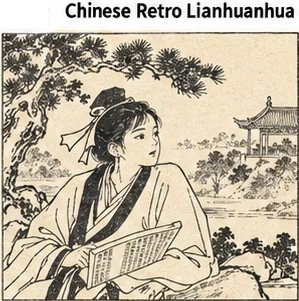 | Fine black line, aged paper, limited palette, traditional picture-story narrative | |
| FE-049 | New-Guochao Flat Gongbi | 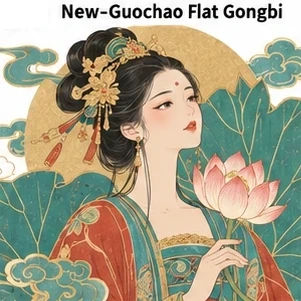 | A modern take on gongbi: flat color blocks, gold accents and traditional patterns | |
| FE-050 | Modern Dunhuang Illustration | 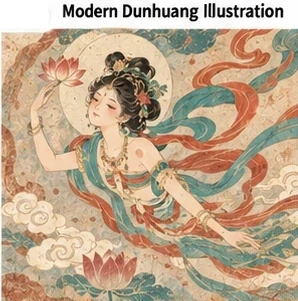 | Flying-apsara curves, mineral pigments, lotus and cloud motifs, mural grain | |
| FE-051 | Modernized Song-Dynasty Light Color | 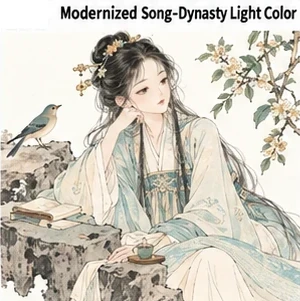 | Rice-white negative space, fine lines, blue-green and ochre, quiet classical mood | |
| FE-052 | New-Chinese Tiny Ink Figures | 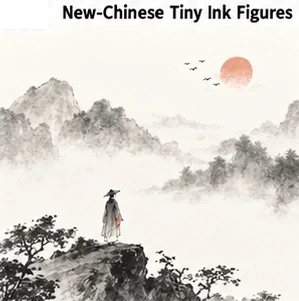 | Wide negative space, ink-wash bleeds, tiny figures, Eastern mood | |
| FE-054 | Shanghai Calendar-Poster Retro | 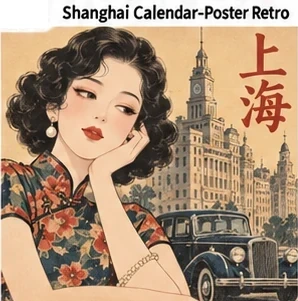 | 1920s–30s Shanghai commercial art, classical female figures (shinü painting), vintage ad colors | |
| FE-056 | Pale Lacquer & Raden Decorative Illustration | 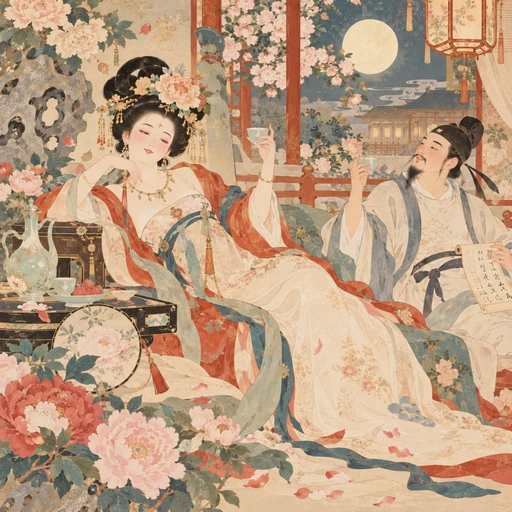 | Flat decorative lacquer-painting look with restrained mother-of-pearl shimmer | |
| FE-057 | Contemporary Peking Opera Comic Illustration | 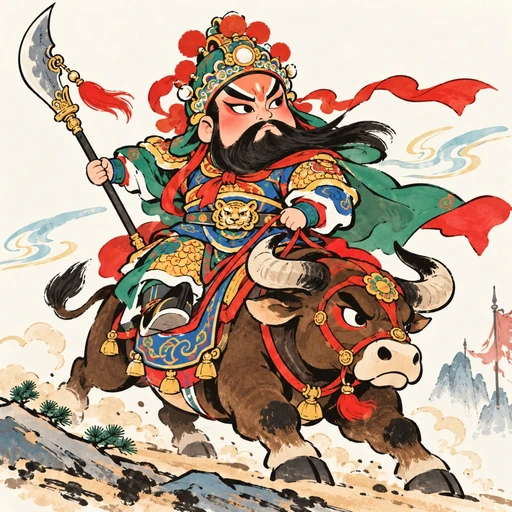 | A modern take on Peking opera: figure-album and face-paint language as comic illustration | |
| FE-061 | Contemporary Literati Ink Cartoon | 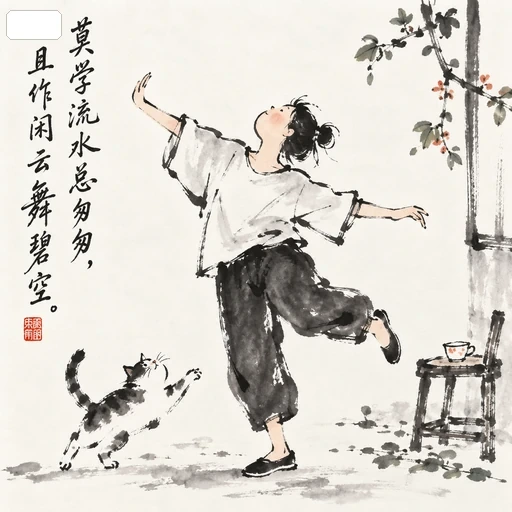 | A modern take on literati ink: everyday scenes in loose brush and ink, wide white space, red seal accents | |
| FE-063 | Chinese Farmers Painting | 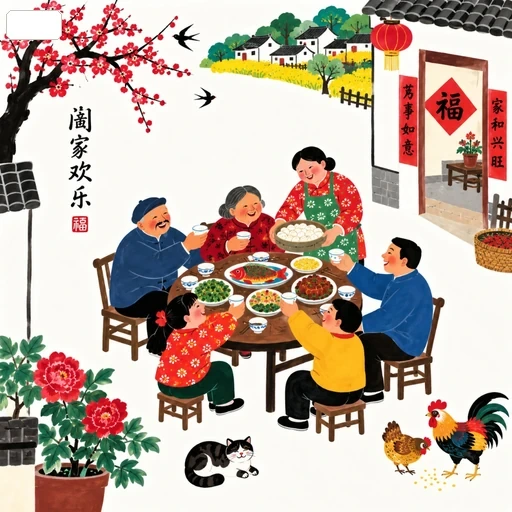 | Naive perspective, bright flat color, lots of open space |
FAQ
Can AI create authentic Chinese ink paintings? AI can produce convincing ink-wash and traditional illustration looks, especially when the prompt names the brushwork, palette, negative space and paper texture. Results are digital images in a traditional style, not hand-painted works, and calligraphy should be checked carefully.
What is the best prompt for Chinese ink style AI? Describe the subject first, then name one style and its traits: brush-and-ink lines, dry brush, ink bleeds, a mostly black palette with light washes, wide negative space and rice-paper texture. Add a red seal only if you want one.
What's the difference between ink wash and gongbi? Ink wash uses loose, expressive brushwork and soft ink bleeds. Gongbi uses precise fine outlines filled with careful flat or layered color. Name the one you want in your prompt.
Are these styles free to use? Yes. Browsing these styles and copying prompts is free and needs no sign-in. Generating images in the GenTidy studio needs an email sign-in and credits.
Why don't the style names mention specific artists? The styles on this page are named by how they look, out of respect for the artists behind the original styles. We also recommend describing AI images by their look rather than by an artist's name.
Can I make Chinese traditional clothing images too? For trying on hanfu, qipao and cheongsam with AI, see Chinese Dress AI (chinesedressai.com). GenTidy focuses on illustration styles and layouts.